


North Island (New Zealand - 12 days)
Route Overview
From Subtropical Bays to Volcanic Hearts
Experience one of the most diverse road trips in New Zealand on this unforgettable journey across the North Island. Starting in Auckland (Tāmaki Makaurau), this scenic driving route showcases dramatic coastlines, geothermal landscapes (of the Pacific Ring of Fire) and rich cultural highlights.
Travel to the remote beauty of Hicks Bay and Wairoa, where rugged shores and sweeping ocean views define the East Coast. Continue to Napier, renowned for its distinctive Art Deco architecture and vibrant seaside atmosphere.
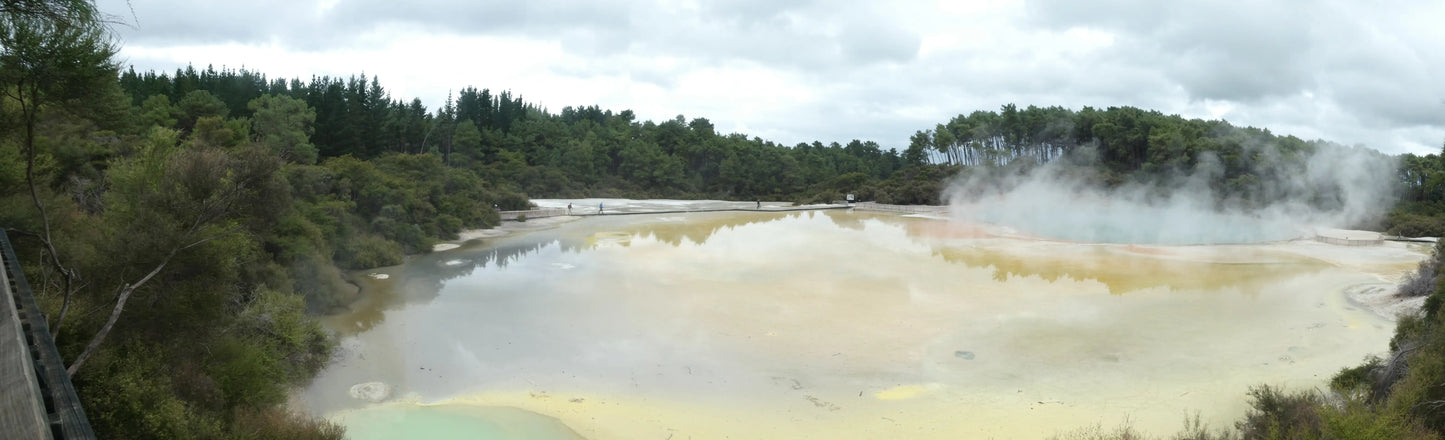
Explore the geothermal heart of the island within the Central Plateau, home to volcanic landscapes and natural wonders, before heading north to the tranquil waters of the Bay of Islands.
Complete your journey in the ancient Waipoua Forest, where towering Kauri trees create one of the most unique and awe-inspiring natural environments in the country.
Coastal Landscapes & Cultural Heritage
- The Bay of Islands: Sail through a subtropical paradise of 144 islands. Visit the Waitangi Treaty Grounds, New Zealand’s most significant historic site, and the boutique town of Russell.
- Napier: Drive into the world’s Art Deco Capital. Rebuilt after the 1931 earthquake, Napier offers a unique blend of 1930s architecture and world-class viticulture.
- The East Cape (Hicks Bay & Wairoa): Experience the raw, untouched beauty of one of NZ’s most remote coastlines. Hicks Bay is among the places that see the world’s first sunrise, and the region offers deep insight into indigenous Māori culture.
Geothermal Wonders & Ancient Forests
- The Central Plateau: Explore the volcanic heart of the island. This "Thermal Wonderland" features the bubbling mud pools of Rotorua, the turquoise craters of Mount Tongariro, and the vast waters of Lake Taupō.
- Waipoua Forest: Walk among the "Ancient Giants." Home to Tāne Mahuta (Lord of the Forest), a 2,000-year-old Kauri tree that stands as a living link to New Zealand’s prehistoric past.
Itinerary
- Day 1: Auckland to Hamilton
- Day 2: Te Kuiti & Waitomo
- Day 3: Pātea & Māori Heritage
- Day 4: Taupō’s Geothermal Wonders
- Day 5: Volcanic Landscapes & Native Forests
- Day 6: The Rugged East Cape (Highway 35)
- Day 7: Rotorua & Geysers
- Day 8: The Coromandel Coast
- Day 9: The Pohutukawa Coast Drive
- Day 10: Northward to the Bay of Islands
- Day 11: Mangamuka Gorge & Waipoua Forest
- Day 12: Return to Auckland
Why choose this North Island road trip?
- One of the most diverse driving routes in New Zealand
- Combines coastlines, geothermal landscapes and cultural highlights
- Ideal for scenic road trips, nature exploration and cultural discovery
Trip Information
- No of Days: 12
- Estimated Daily Drive: 3 hrs 39 mins
-
Estimated Max Elevation: 902m (2,959ft)
Basic Itinerary
Couldn't load pickup availability


Frequently Asked Questions
What are the main highlights of this route?
Key highlights include Bay of Islands, Rotorua, and Waipoua Forest.
What is the significance of the Bay of Islands?
This subtropical paradise in the "Winterless North" is home to 144 islands and serves as the cradle of modern New Zealand. You can visit the Waitangi Treaty Grounds, the country's most important historic site, where the founding document between the British Crown and Māori chiefs was signed.
Why is the East Cape (Hick’s Bay) described as "remote"?
The East Cape is one of the least populated and most authentic regions of New Zealand. Because it is the easternmost point of the country, Hick’s Bay is among the first places on Earth to see the sunrise each morning. The drive here is slower and more rugged, offering deep immersion into local Māori culture.
Why is Napier famous?
Napier is recognised as the world’s Art Deco capital, rebuilt in the 1930s following a major earthquake and now known for its architecture and wine region.
What can I expect in the "Volcanic Heart"?
The Central Plateau is part of the Pacific Ring of Fire. As you drive through Rotorua and Taupō, you will encounter active geothermal landscapes featuring bubbling mud pools, natural hot springs, and the turquoise volcanic craters of the Tongariro region.
What are the Kauri trees in Waipoua Forest?
The Waipoua Forest is a prehistoric sanctuary. It is home to Tāne Mahuta (the "Lord of the Forest"), a giant Kauri tree estimated to be around 2,000 years old. Standing before this living link to the past is often described by travelers as a deeply spiritual experience.
What is the best time of year to drive this route?
The route can be driven year-round. Summer (December–February) offers warmer weather, while spring and autumn provide quieter roads and mild conditions.
What makes this route unique?
This journey combines subtropical coastlines, geothermal landscapes, volcanic terrain, and ancient forests into one seamless and highly varied road trip.